When I first took office in 2020, financial reporting in the City of Margaret looked very different than it does today.
We were shown screenshots.
Not summaries.
Not reconciled statements.
But screenshots of more than twenty separate bank accounts-each holding public money, each serving a different purpose, and each telling part of the City’s financial story.
That was the reality at the beginning.
From Over Twenty Accounts to Two Numbers
After I shared those bank balances publicly-so residents could see what existed-the reporting changed.
The detailed account-level view disappeared.
In its place came two numbers:
- A General Fund balance
- A Public Works balance
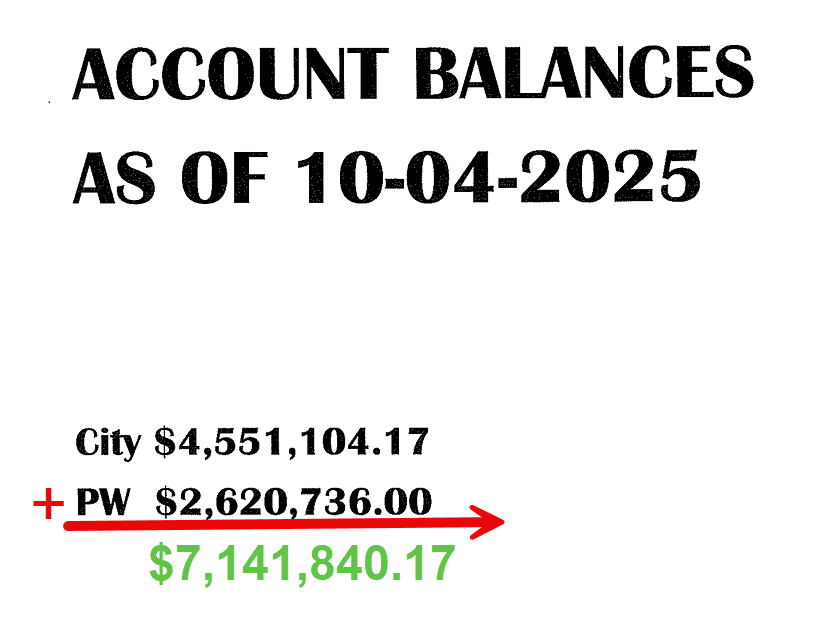
Correction about the $7.1 million balance that I repeated at my first council meeting. That was the last number I received in my council package before being sworn in. I have since discovered that the Water & Sewer Impact fees were double counted and the Sewer Impact fee is $501,368, and the Water Impact fee account balance is $71,400. These bank accounts show under the General Fund and Public Works Bank Account Logins on the bank website, ergo, the actual balance is around $6.5 million. This is just another example of why we should use system generated reporting, not manually typed figures.
That’s it.
From that point forward, the public-facing financial information was reduced to one audit per year, and only showing those two balances growing over time in our meeting documents. That is what the documents now reflect. No underlying detail. Just two numbers.
Why That Mattered
This wasn’t an improvement in clarity.
It was a loss of visibility.
With twenty-plus accounts, you can ask:
- What funds are restricted?
- What cash is committed?
- What is idle?
- What is earmarked for infrastructure, emergencies, or liabilities?
Even With Less Data, the Pattern Was Clear
Ironically, even as the reporting narrowed, the trend became impossible to ignore.
Year after year, those two balances increased.
No matter how little detail was provided, the direction never changed:
- 2020 → higher
- 2021 → higher
- 2022 → higher
- 2023 → higher
- 2024 → significantly higher
By 2024-2025, the General Fund alone grew approximately $1.7 million in cash, with Public Works holding substantial additional balances as well.
That conclusion does not rely on speculation.
It comes directly from the City’s own annual snapshots and audits that I shared
This Is Why I Never Stopped Asking
Some people ask why I kept pushing for:
- More detail
- Reconciliations
- A real budget
- Year-over-year analysis
This is why.
When financial reporting becomes less detailed while balances grow larger, the responsibility to ask questions increases, not decreases.
You cannot:
- Make informed decisions
- Plan capital projects
- Explain priorities to residents
using just two numbers.
Audits Confirmed Growth – Not Strategy
The annual audits I shared previously confirmed that the money existed. They validated the balances. They showed the City was solvent.
But audits do not explain:
- Why money is being held
- What it is intended for
- What risks exist if it is not planned against
Audits look backward.
Budgets decide the future.
And for years, the future was being navigated without a map.
What Vision Makes Obvious
Anyone willing to look past the surface could see it:
- The City was not broke
- The City was accumulating cash
- The City lacked a clear, public framework for how that cash would be used
That is not an accusation.
That is an observation supported by the City’s own records.
Where We Are Now
After months of reconciling fragmented information and rebuilding context that had been stripped away, I now have a far clearer view of Margaret’s financial position than what was ever provided in those annual snapshots.
And soon, I will be sharing more.
Not rumors.
Not opinions.
But budget findings grounded in real numbers, real trends, and real constraints.
Chaotic accounting does not fix itself overnight and transparency does not return unless someone works on it. I am thankful for the staff that is working diligently to help bring order to the chaos. And we are close. Here is what I am providing the Council at each meeting, and I will only provide more as we get the data into a reportable format. The Left are accounts that we cannot use for regular expenses, and the right side is liquid.
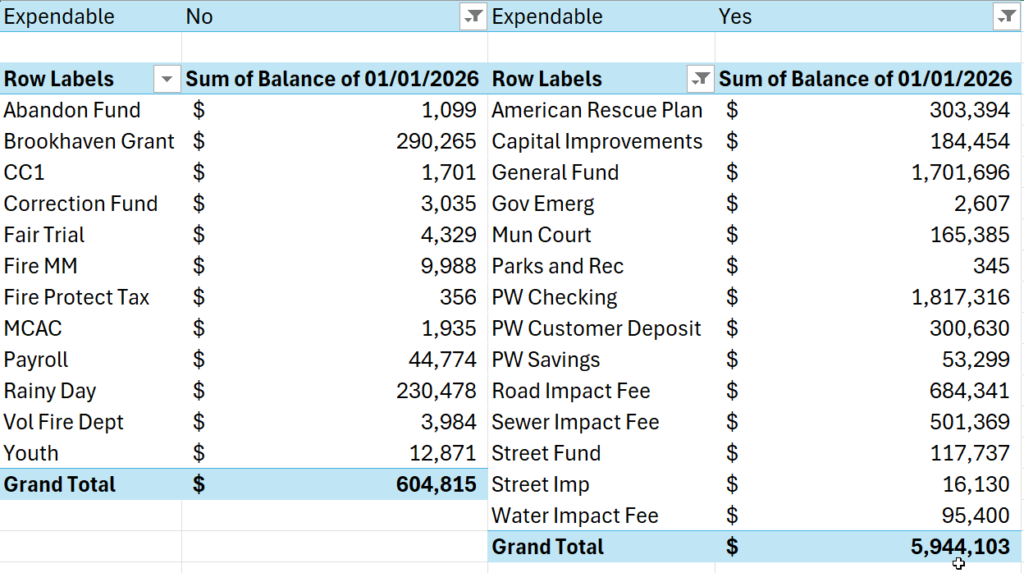
This is how we move our home-the City of Margaret-into the light, where planning replaces guesswork, and where growth is guided instead of merely observed.
Looking Back – and Looking Closely
When I came into office in 2020, the City did not operate with two bank account balances.
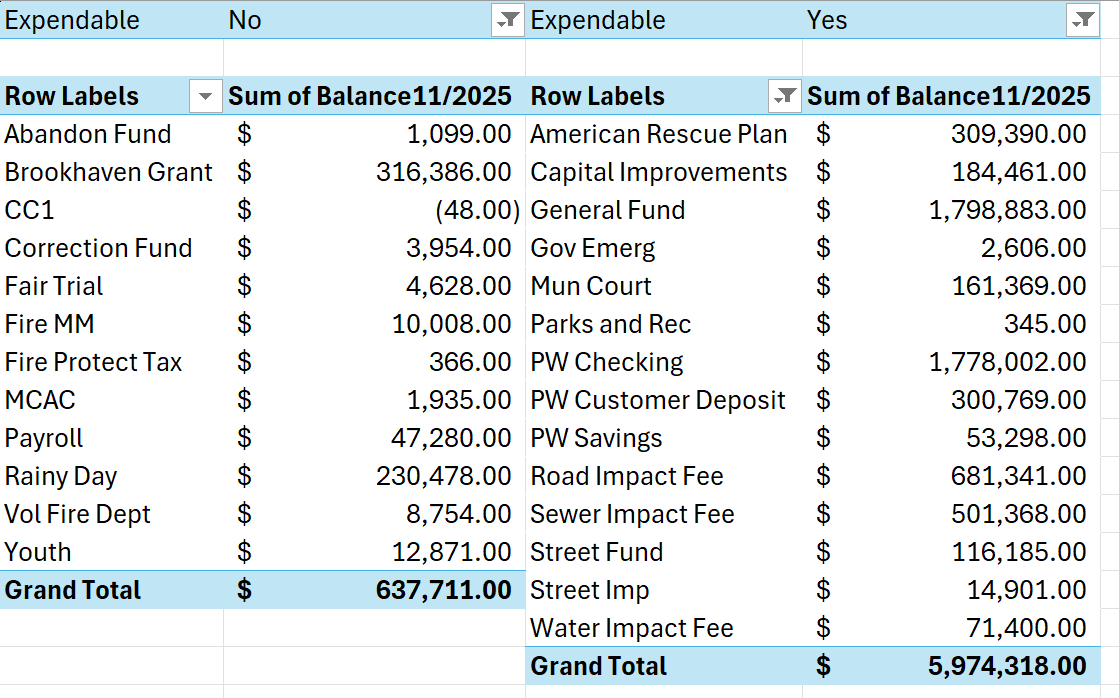
Those accounts were visible then-shown through screenshots as part of financial reporting. They told a more complete story: separate balances, separate purposes, and separate histories.
Today, many of those same accounts still exist.
And when you look at them side by side-2020 versus now-something else becomes clear:
Some of them haven’t changed at all.
No growth.
No interest earned.
No movement.
Others have actually shrunk, not because the money was invested in the community, but because routine bank fees slowly whittled the balances down month after month.
Money sitting idle.
Money earning zero interest.
Money quietly losing value.
That is not strategy.
That is not planning.
And it is not responsible stewardship of public funds.
What Stewardship Requires
Public money should either be:
- Actively supporting services and infrastructure, or
- Safely earning interest while being held for a clearly defined purpose
Allowing funds to sit untouched for years-earning nothing, sometimes costing money-serves neither the City nor its residents.
This is not about blame.
It is about recognizing what the numbers show when you take the time to really look at them.
The Next Step
At the next City Council meeting, I will be presenting a plan.
A plan to:
- Bring clarity to how funds are structured
- Reduce unnecessary idle balances
- Ensure public money is working for the City, not sitting still or slipping backward
- Create transparency so residents can see not just how much we have, but how it is being managed
This work has taken time because it required untangling years of fragmented reporting and incomplete context.
But the goal is simple:
To move from passive accumulation to intentional stewardship.
I invite residents to look at the accounts then and now, ask questions, and follow along as we take the next steps-together-to bring our City fully into the light and manage its resources with the care and vision they deserve.